Wrap Dress That Fits Like It Was Tailored to You
The wrap dress is one of the most universally flattering garments ever designed. It cinches at the waist, skims the hips, and creates a V-neckline that elongates the torso. But the magic only works when the fit is right. A wrap dress custom fit eliminates the two most common frustrations -- a neckline that gaps open every time you bend forward and a waistline that sits too high or too low for your proportions.
Sewing your own wrap dress from a made-to-measure pattern puts you in control of every element: the depth of the V, the snugness of the waist tie, the length of the skirt, and the amount of overlap that keeps everything in place. If you have ever fallen in love with the idea of a wrap dress but been disappointed by the reality of one off the rack, this guide is for you.
We will cover fabric selection, measuring, cutting, and the full construction sequence for a wrap dress with wrap dress custom fit that moves with your body and stays exactly where it should. The process is beginner-friendly and deeply satisfying -- once you make one, you will want to make a dozen.
Why Wrap Dresses Are Hard to Fit Off the Rack
The wrap dress is a paradox: its simple construction makes it easy to sew, but its fit depends on a precise relationship between bust, waist, and hip measurements. A standard size wraps based on averages. If your bust-to-waist ratio differs from the assumed proportions, you get gaping, pulling, or insufficient overlap.
Gaping at the neckline is the most notorious issue. It happens when the front bodice panels are too wide relative to your bust. The fabric does not hug the body tightly enough, so the V-neck falls open. On the other end of the spectrum, insufficient overlap means the wrap does not close properly, leaving an awkward gap at the skirt level.
A made-to-measure pattern recalculates the front panel width, the wrap angle, and the tie placement based on your measurements. The result is a dress that stays closed when you walk, sit, bend, or raise your arms -- no safety pins required.
Choosing Your Fabric
A wrap dress needs fabric that drapes around curves without being so slippery that it slides out of the wrap. Matte jersey is the classic choice -- it clings gently, stretches for comfort, and holds the wrapped shape all day. Rayon challis offers a woven alternative with beautiful drape and a wide range of prints. Crepe adds a slightly more structured feel while still flowing nicely.
Avoid quilting cotton (too stiff, no drape), silk charmeuse (too slippery for a beginner wrap), and anything with a lot of body or crispness. The fabric should fold smoothly when you hold it in your hand and fall in soft folds, not stand away from your body.
You will need approximately two and a half to three yards of 60-inch fabric, depending on your height and desired length. Pre-wash in the method you plan to use for the finished dress. Rayon and jersey can both shrink significantly.
Essential Measurements for a Wrap Dress
The wrap dress pattern uses these measurements to generate a dress with true wrap dress custom fit:
- Bust -- Measured at the fullest point, tape parallel to the floor.
- Waist -- Natural waistline, where your body creases when you bend sideways.
- Hips -- Fullest part of the seat.
- Shoulder width -- Point to point across the back.
- Bodice length -- From the shoulder point, over the bust, to the natural waistline.
- Desired skirt length -- From the waistline to where you want the hem.
These six measurements give the pattern generator everything it needs to draft a bodice that wraps smoothly and a skirt that falls at the right length. Enter them carefully and the system handles the geometry of the wrap angle, the dart placement, and the tie position.
Cutting and Preparing the Pieces
A wrap dress typically has five main pieces: two front bodice panels (one wraps over the other), a back bodice, a front skirt, and a back skirt. Some patterns combine the bodice and skirt into a single piece. You will also cut the waist ties and any facing pieces for the neckline.
Lay out and cut according to the pattern layout, paying attention to the grainline. For jersey, align the direction of greatest stretch around the body (horizontal). For woven fabrics, keep the grainline vertical. Transfer all notches and markings, especially the points where the wrap overlaps and where the ties attach.
Sewing the Bodice
Start by sewing the shoulder seams, joining the front panels to the back. Press seam allowances open or toward the back. If your fabric is a knit, use a stretch stitch or a narrow zigzag.
Next, apply a facing or binding to the neckline and the front wrap edges. A self-fabric facing folded to the inside gives a clean finish. For jersey, a narrow binding strip is faster and less bulky. This edge treatment runs from the neckline, down the front wrap edge, and around to the side seam -- it is the frame of the dress, so take your time and keep it smooth.
Sew the waist darts or ease the bodice to the skirt, depending on your pattern design. The darts shape the bodice to follow your waist-to-bust curve, and in a wrap dress custom fit pattern, they are positioned based on your measurements for a smooth line.
Constructing the Skirt and Attaching the Ties
If the bodice and skirt are separate pieces, join them at the waistline seam. Match center backs, side seams, and the front wrap edges. Press the seam allowances toward the bodice for a cleaner fall.
Create the waist ties from self-fabric. Cut two long strips (typically 2 inches wide by about 40 inches long, depending on your waist measurement). Fold each in half lengthwise, right sides together, sew along the long edge and one short end, turn right side out, and press. Attach one tie at the right side seam on the inside of the dress, and the other at the left front wrap point. When you put the dress on, the right tie wraps around and meets the left tie at the front, cinching the waist and holding the wrap in place.
The exact tie placement is one of the details a made-to-measure pattern calculates from your waist measurement. A well-placed tie sits at your natural waistline and distributes tension evenly, so the dress stays comfortable and the wrap stays closed all day.
Hemming and Finishing
Sew the side seams from the underarm to the skirt hem. Try the dress on and check the hem length -- it should be even all the way around since the wrap front overlaps rather than hanging straight. Fold the hem up by half an inch and then again by half an inch for a narrow double-fold hem. On slippery fabrics, hand-stitching the hem gives the cleanest result, but a machine-stitched narrow hem works perfectly well.
Give the entire dress a final press. Pay extra attention to the front edges and the neckline, where a crisp press makes the difference between homemade and handmade. Hang the dress on a hanger for a few hours to let the bias areas relax before your final fitting.
Wearing Your Custom Wrap Dress
Put the dress on by slipping your arms through the shoulders, wrapping the right front across your body, and tying the inner tie at the right side seam. Then wrap the left front over, bring the outer tie around your waist, and tie at the left side or the back -- wherever feels most comfortable. The V-neckline should lay flat, the wrap should overlap generously, and the waist should feel defined without being restrictive.
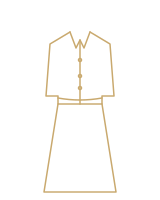
This is the promise of wrap dress custom fit: a garment that works with your body instead of against it. Try the wrap dress pattern for your next project, or explore other dresses like the shirt dress in the full pattern collection.
Frequently Asked Questions
How do I stop a wrap dress from gaping at the neckline?
Gaping happens when the bodice front is too wide for your bust or when the wrap angle is too shallow. A made-to-measure pattern calculates the wrap overlap from your actual bust and waist measurements, creating enough overlap to stay closed without pins.
What fabric works best for a wrap dress?
Matte jersey, rayon challis, and crepe are ideal. They drape around the body, hold the wrap shape, and are comfortable to wear. Avoid very stiff or very slippery fabrics.
Can I make a wrap dress if I am a beginner?
Yes. A wrap dress has relatively few pattern pieces, no zippers, and forgiving construction. A made-to-measure pattern simplifies fitting, which is normally the hardest part of dress sewing for beginners.
How long should a wrap dress be?
That is entirely your preference. Knee-length is the most versatile option. Enter your desired length when generating the pattern, and the system will draft the skirt accordingly.
Ready for your perfect fit? Start with a free pattern →
Patterns that use this
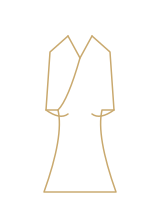
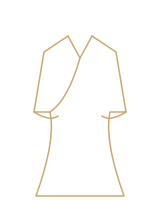
Related articles
Beginner Dress Sewing: From Measurements to Finished Garment →Straight-Leg Jeans for Men: The Custom Fit Difference →Try these patterns
Generate a custom-fit pattern in minutes. First pattern free.